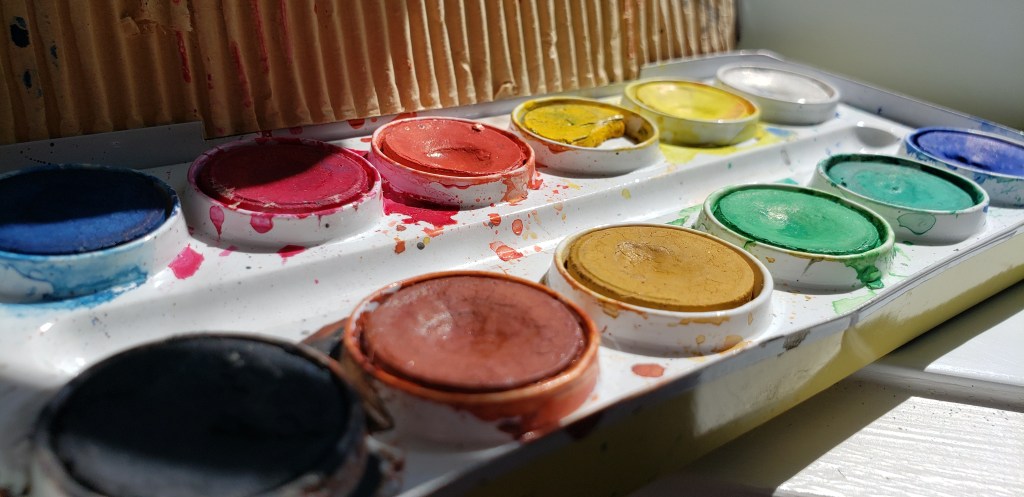
Watercolour painting can be surprisingly easy. If you’re new to this medium, I suggest experimenting with dropping colours beside each other so you can see how they bleed into each other. This will give you an idea of how much is too much, how much paint you actually need, how quick it dries – in turn telling you how long you have to work with what’s in front of you.
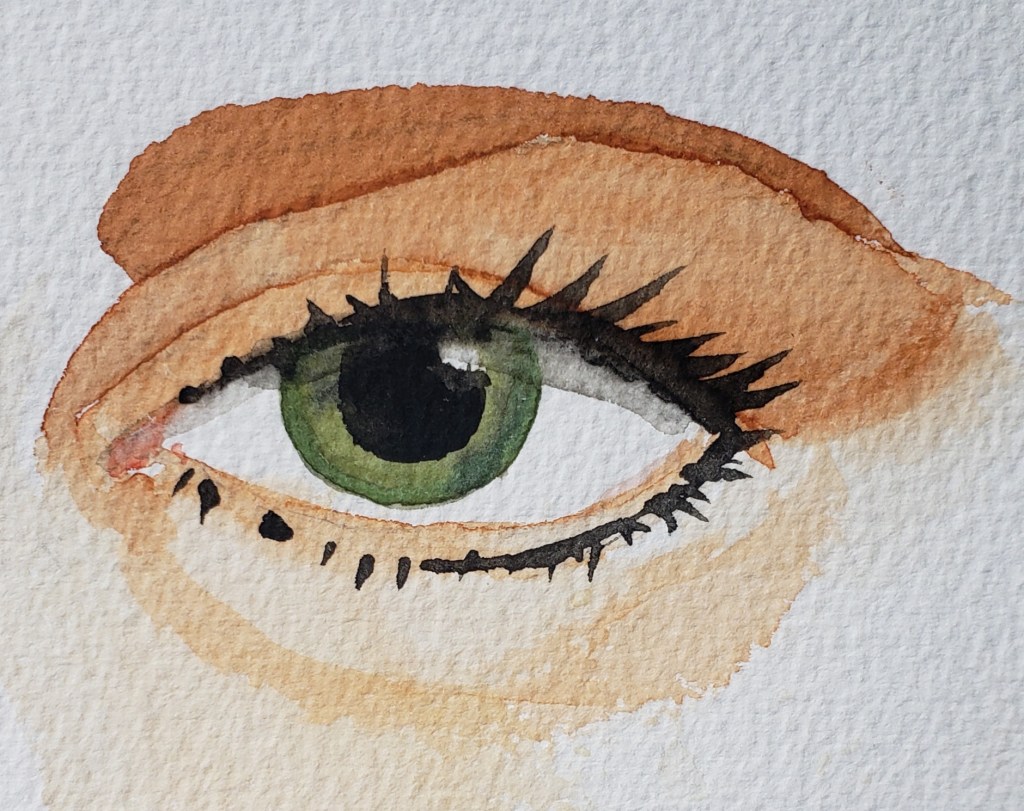
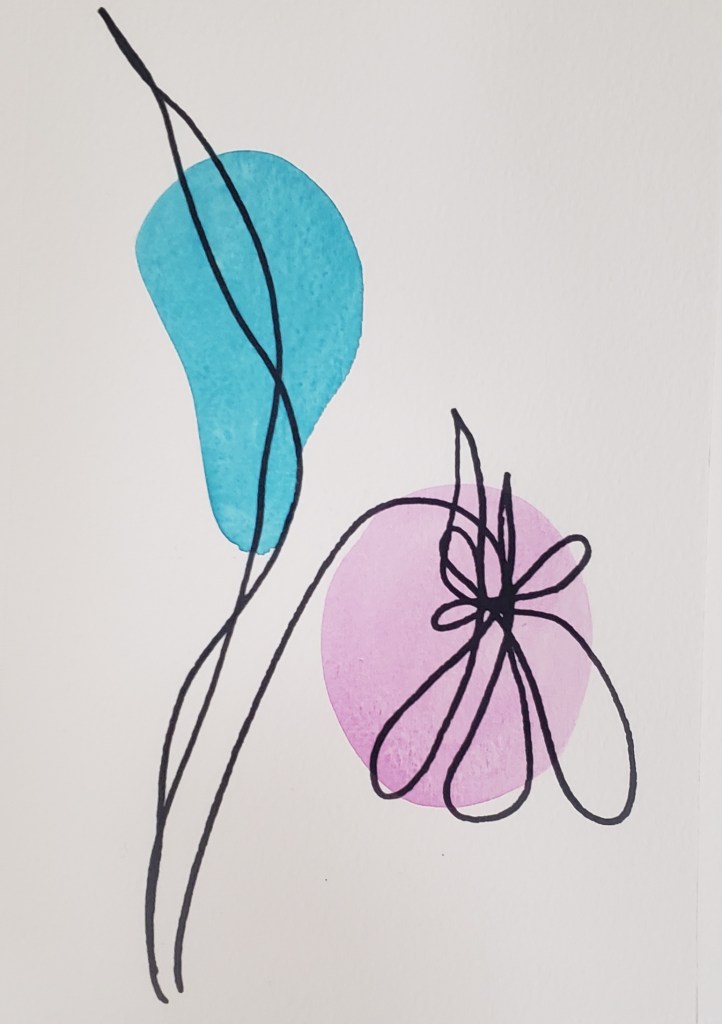
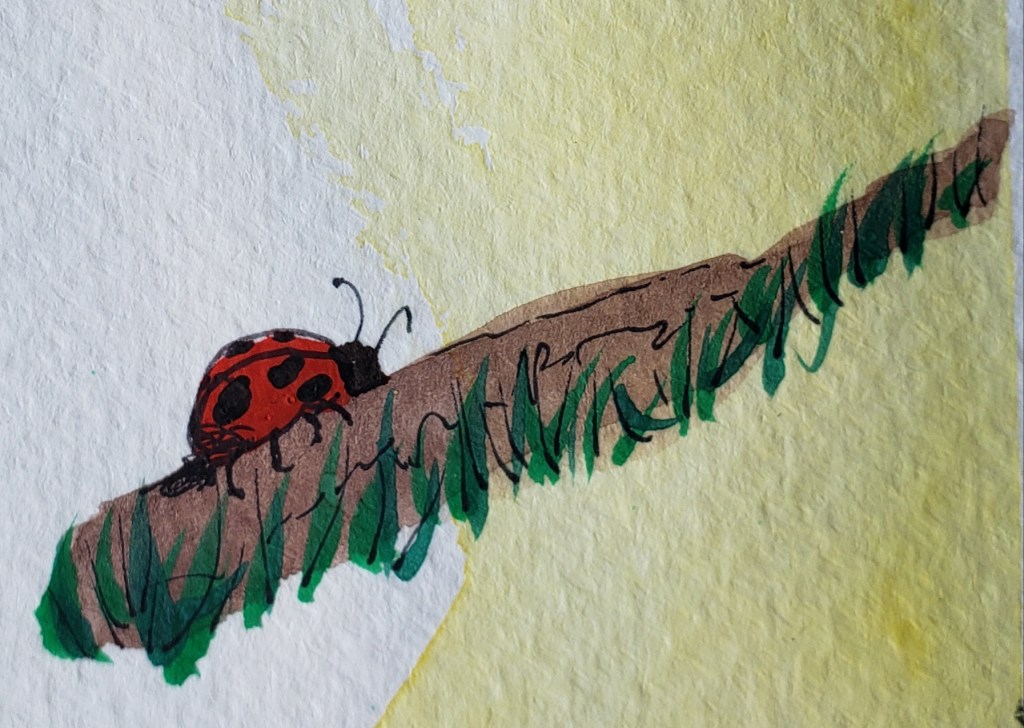
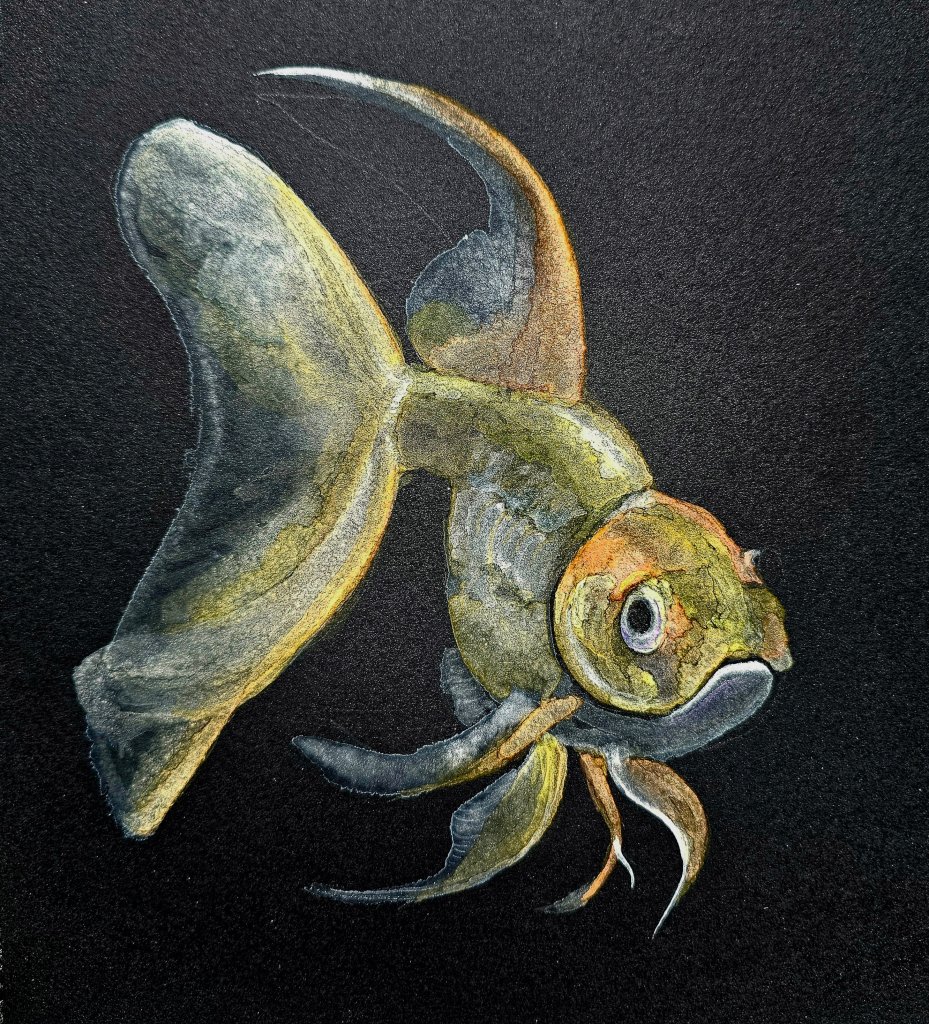
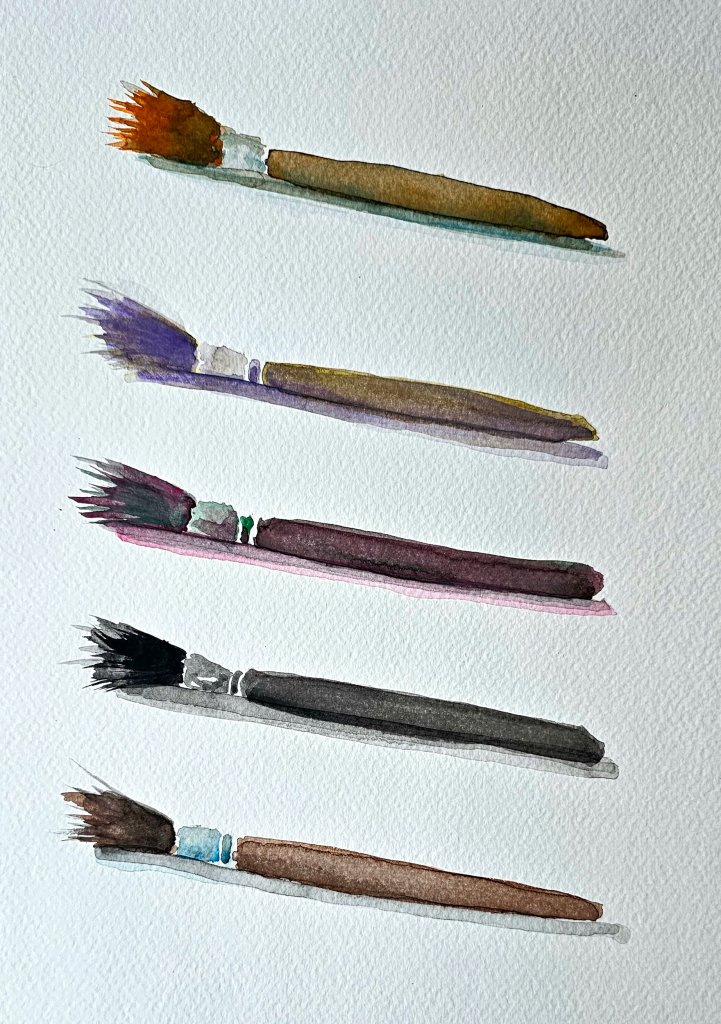
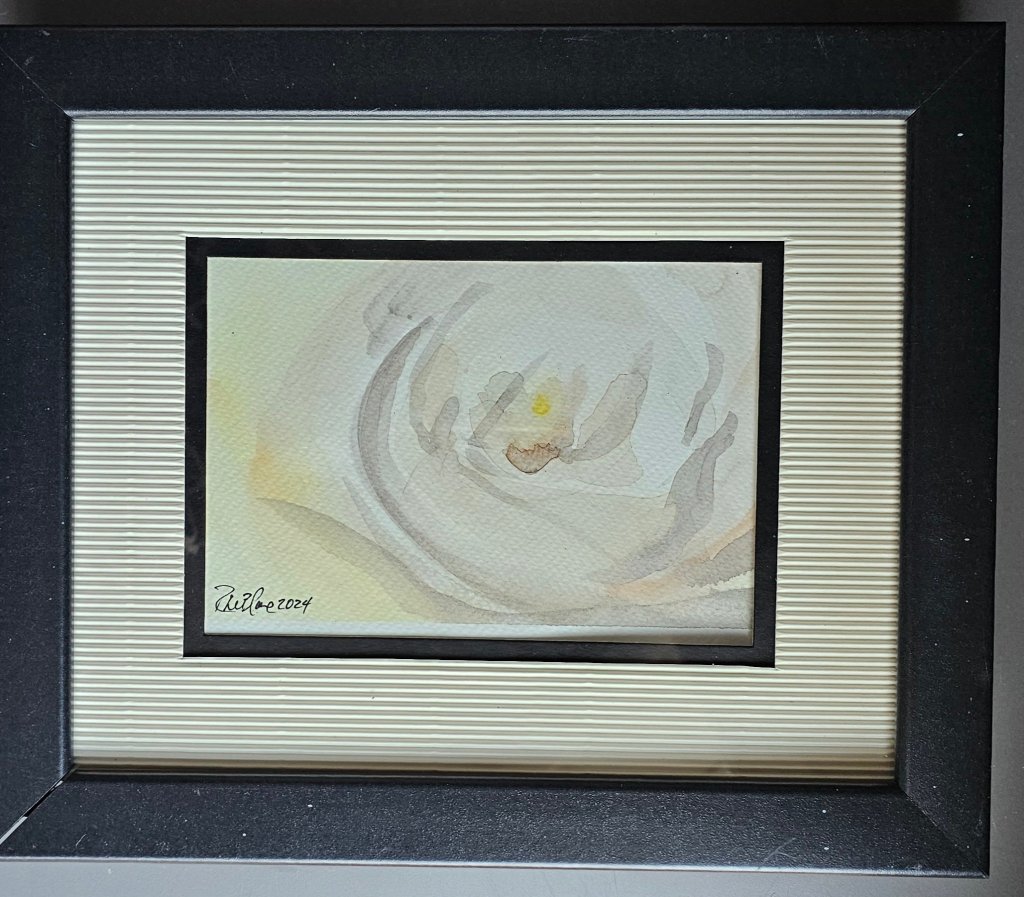
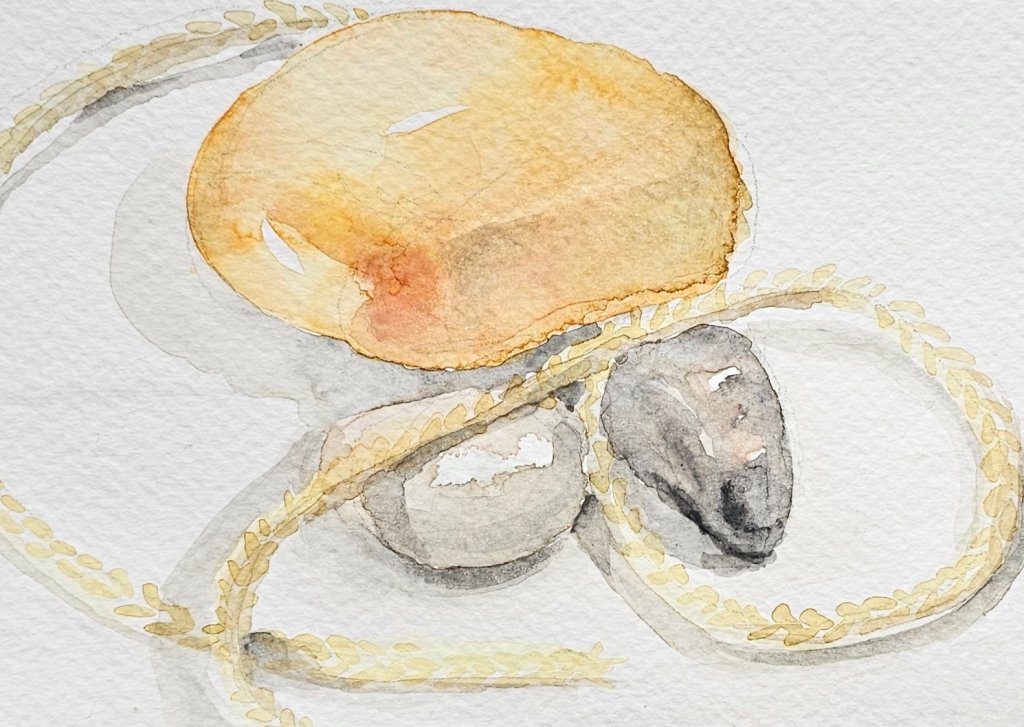
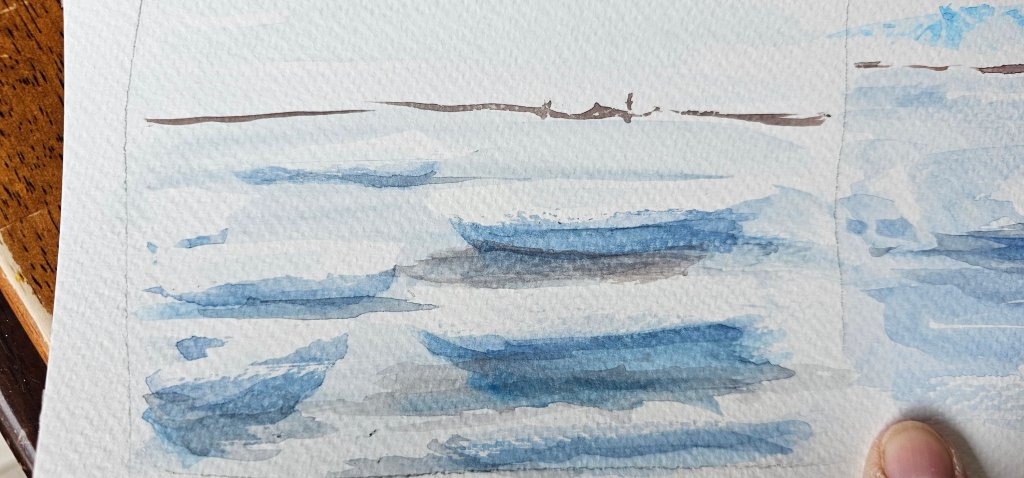
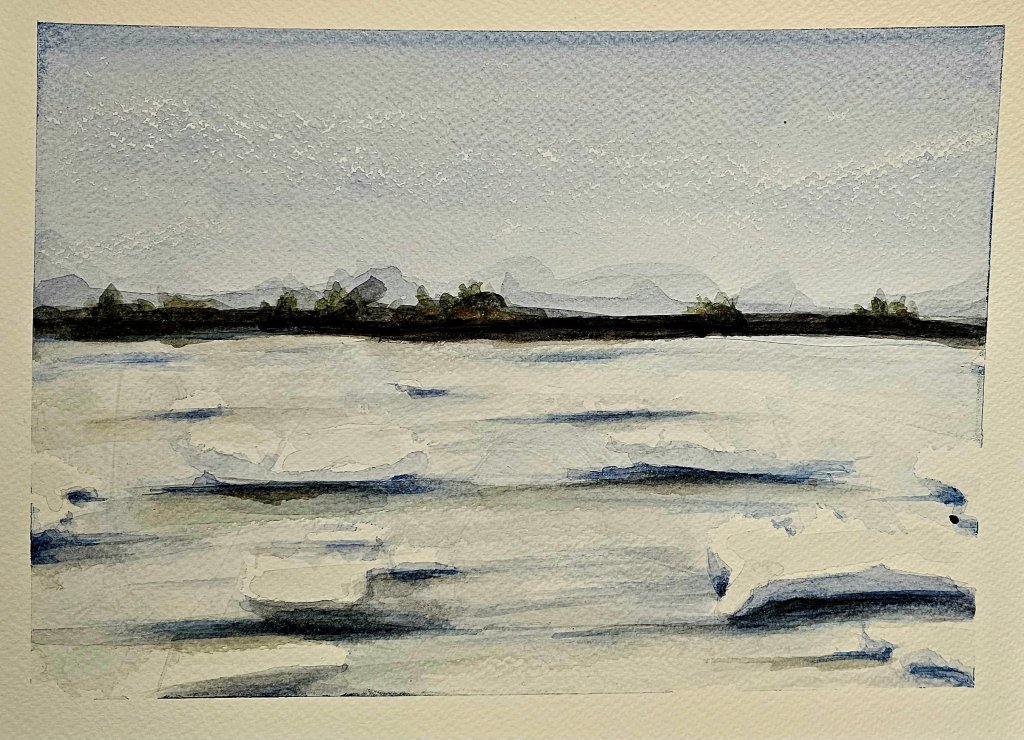
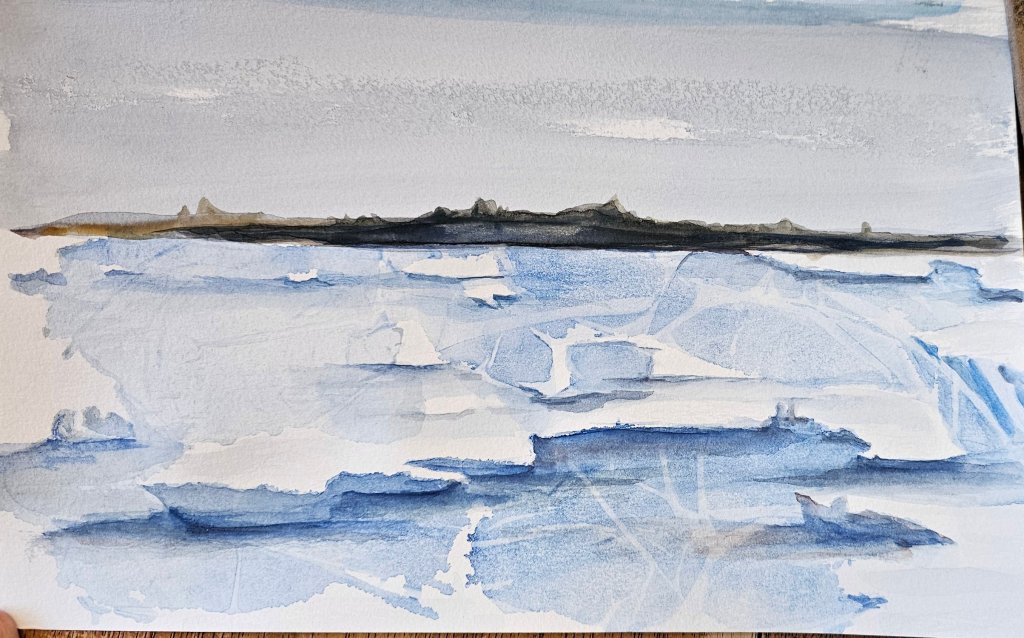
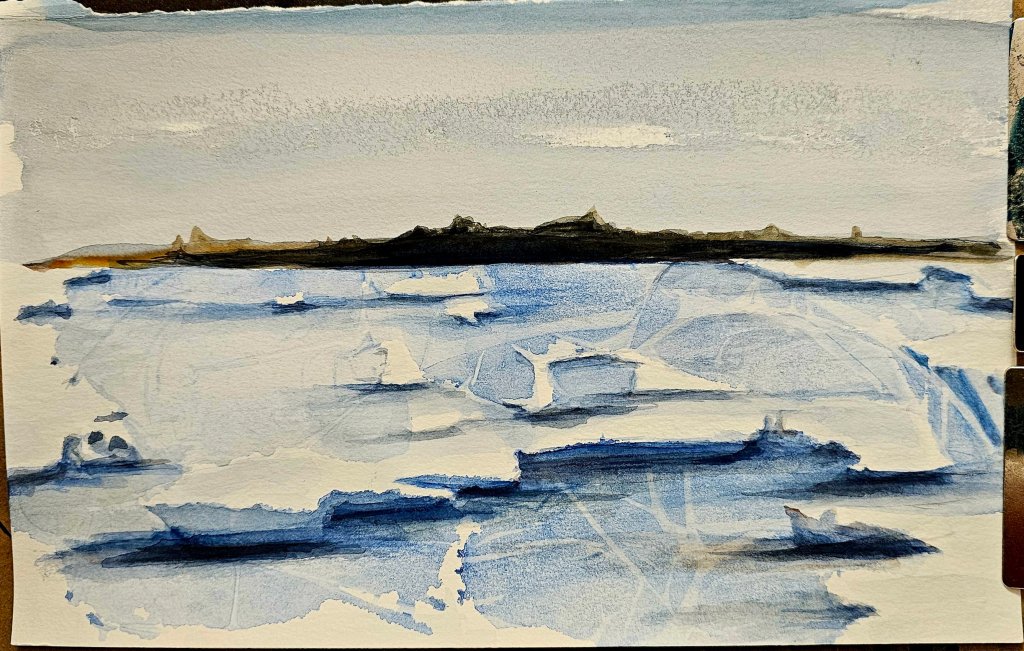
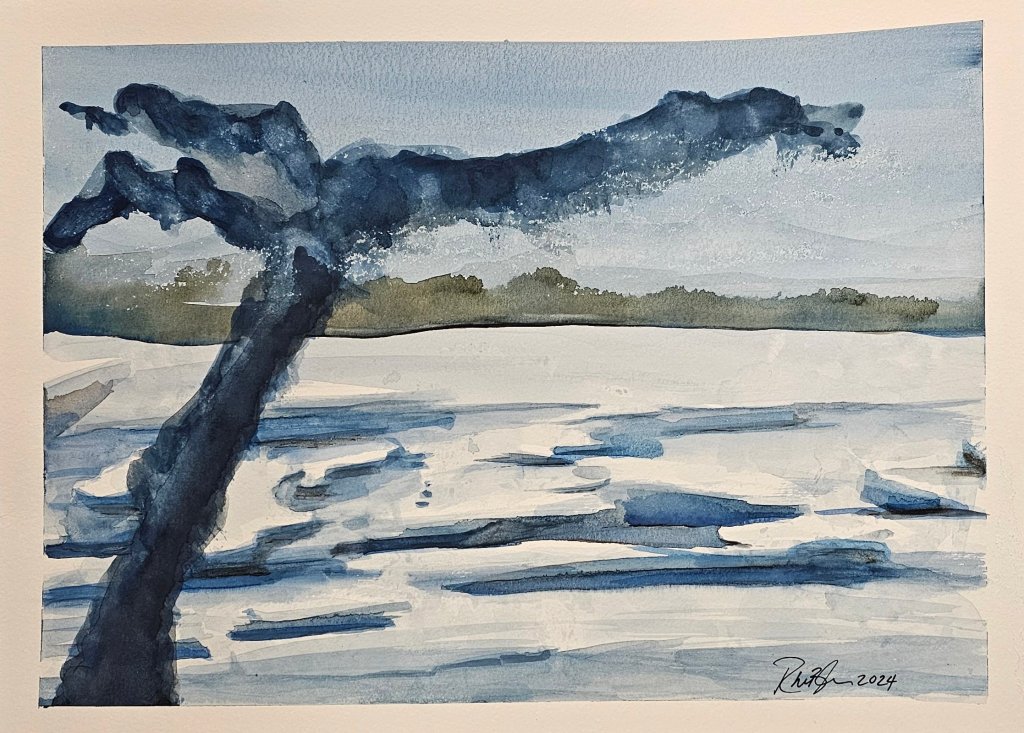
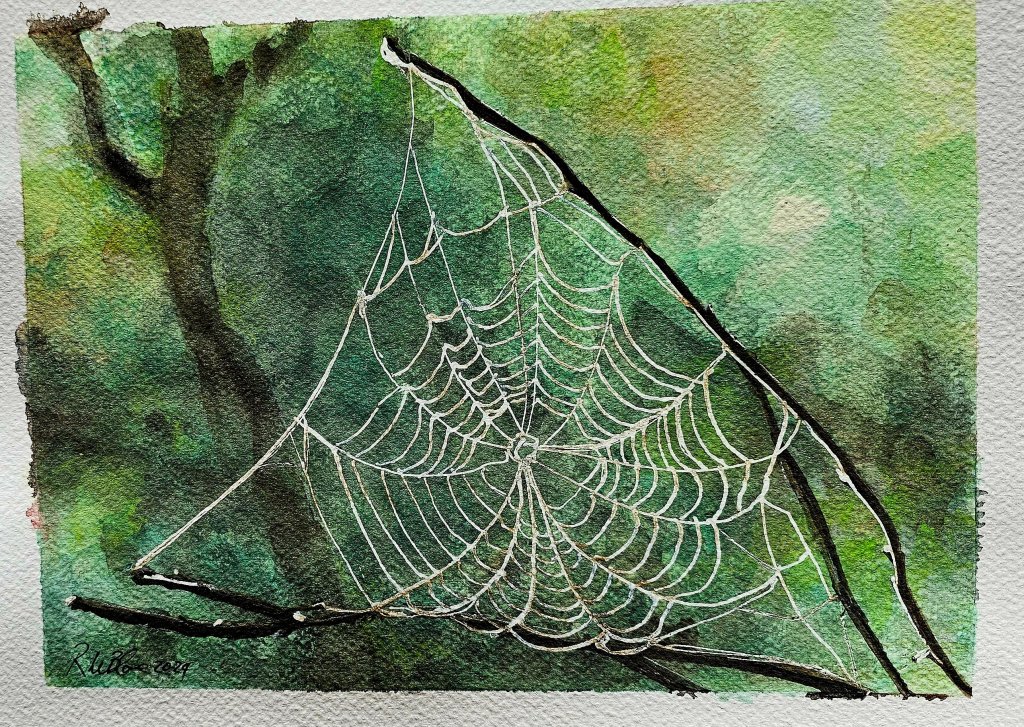
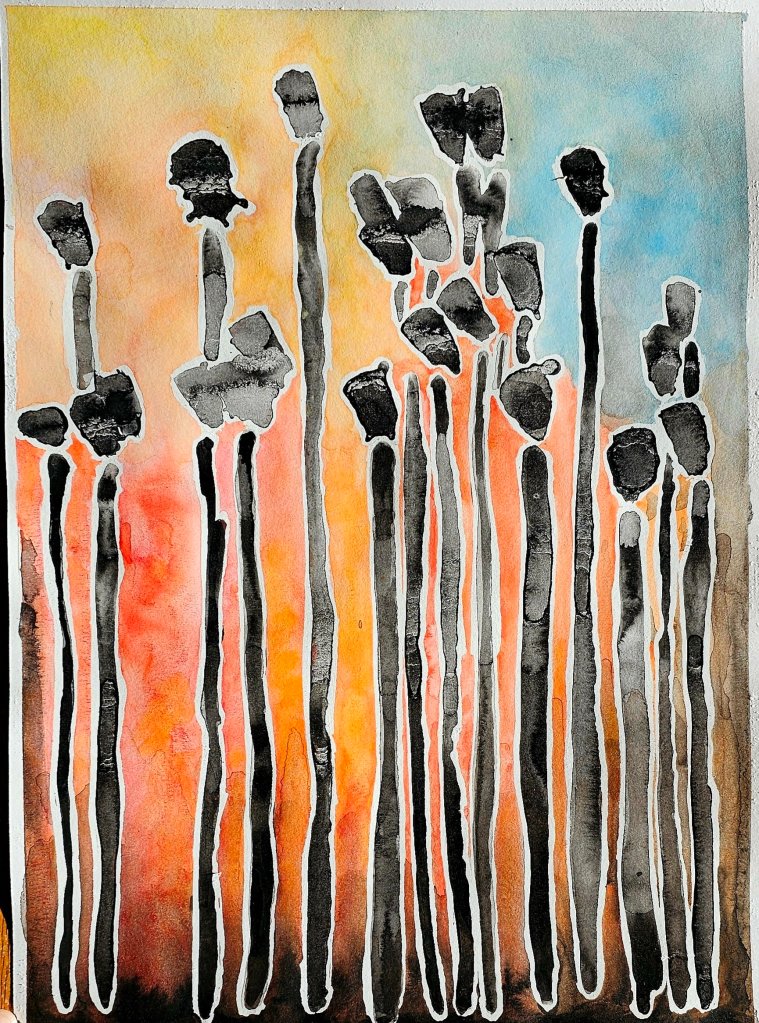
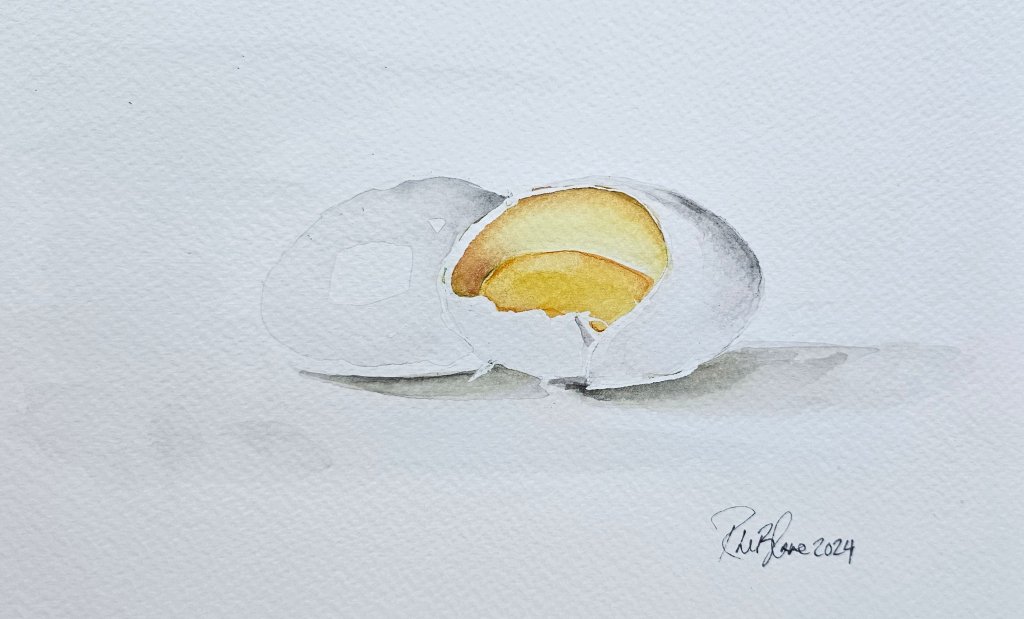
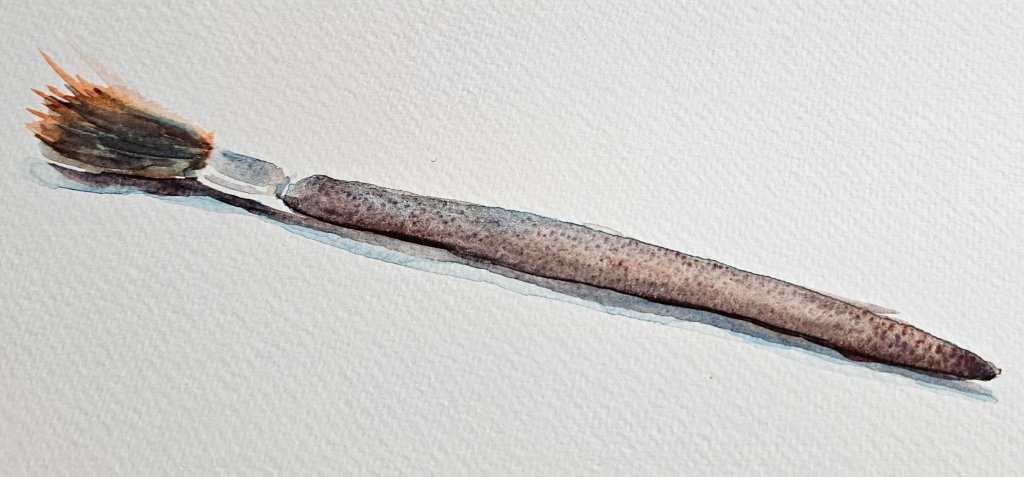
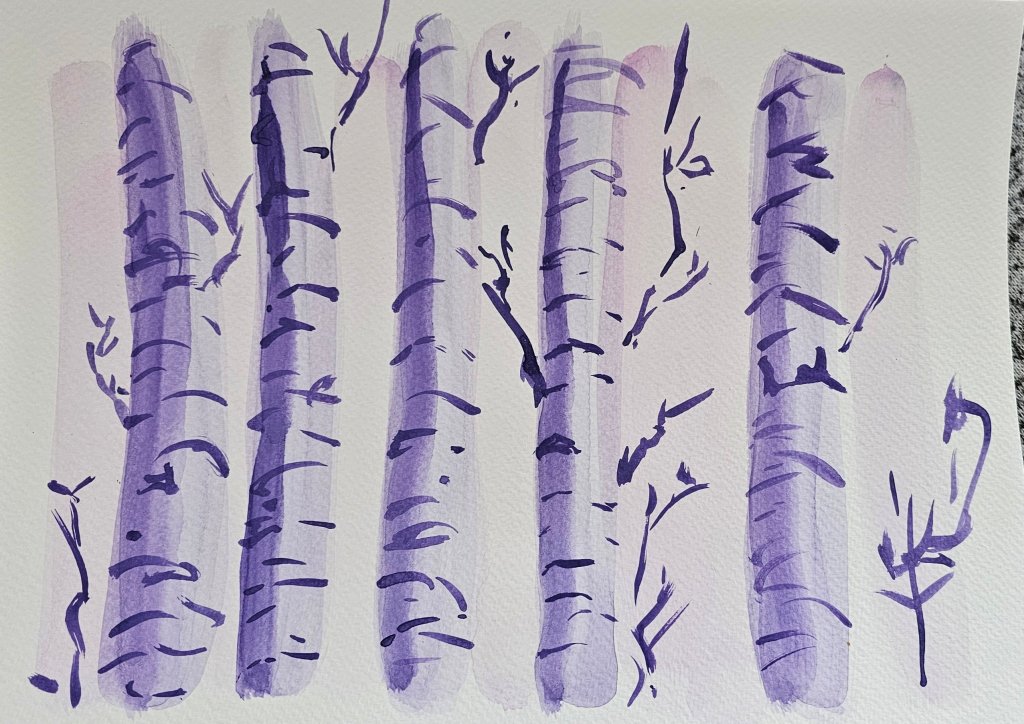
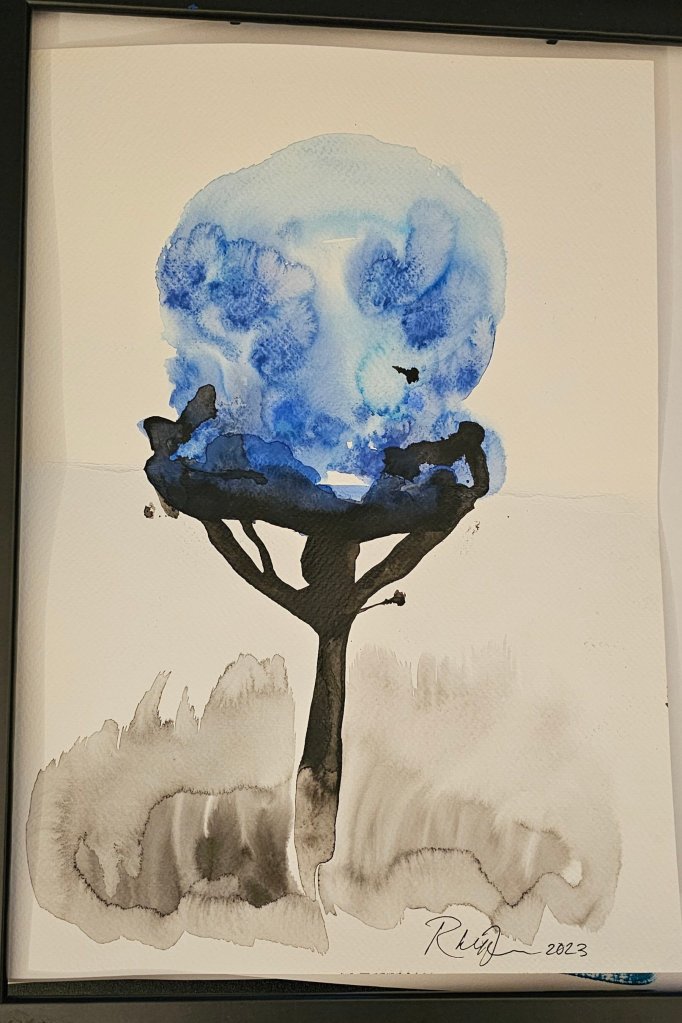
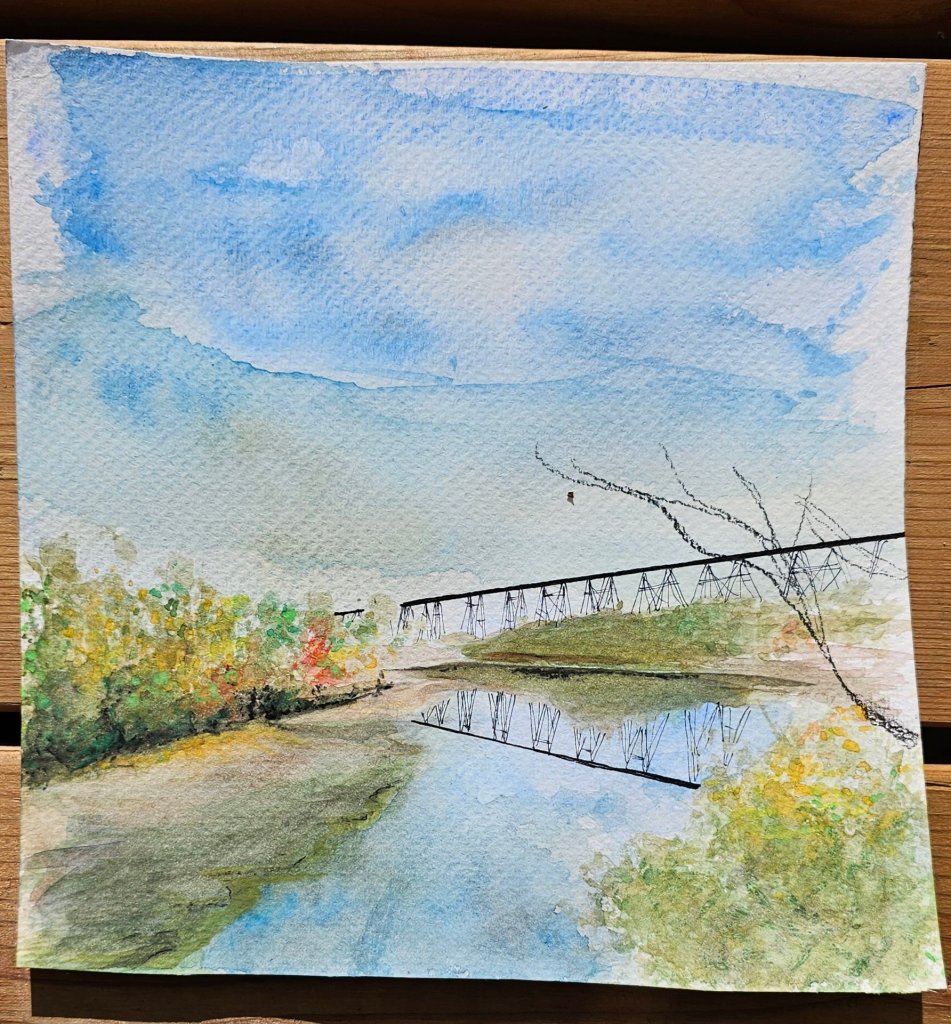
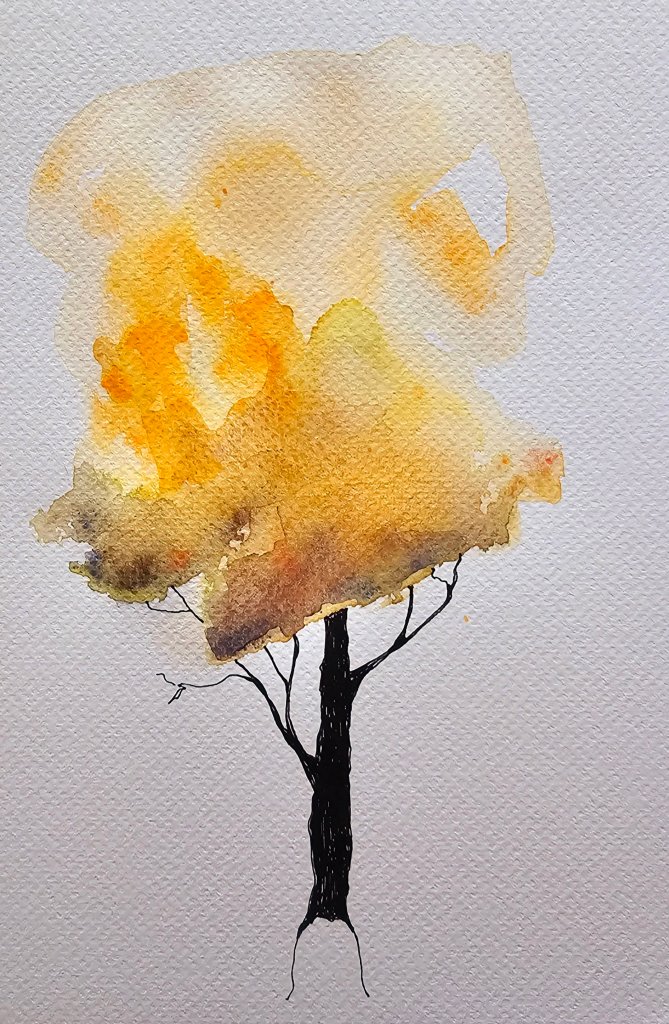
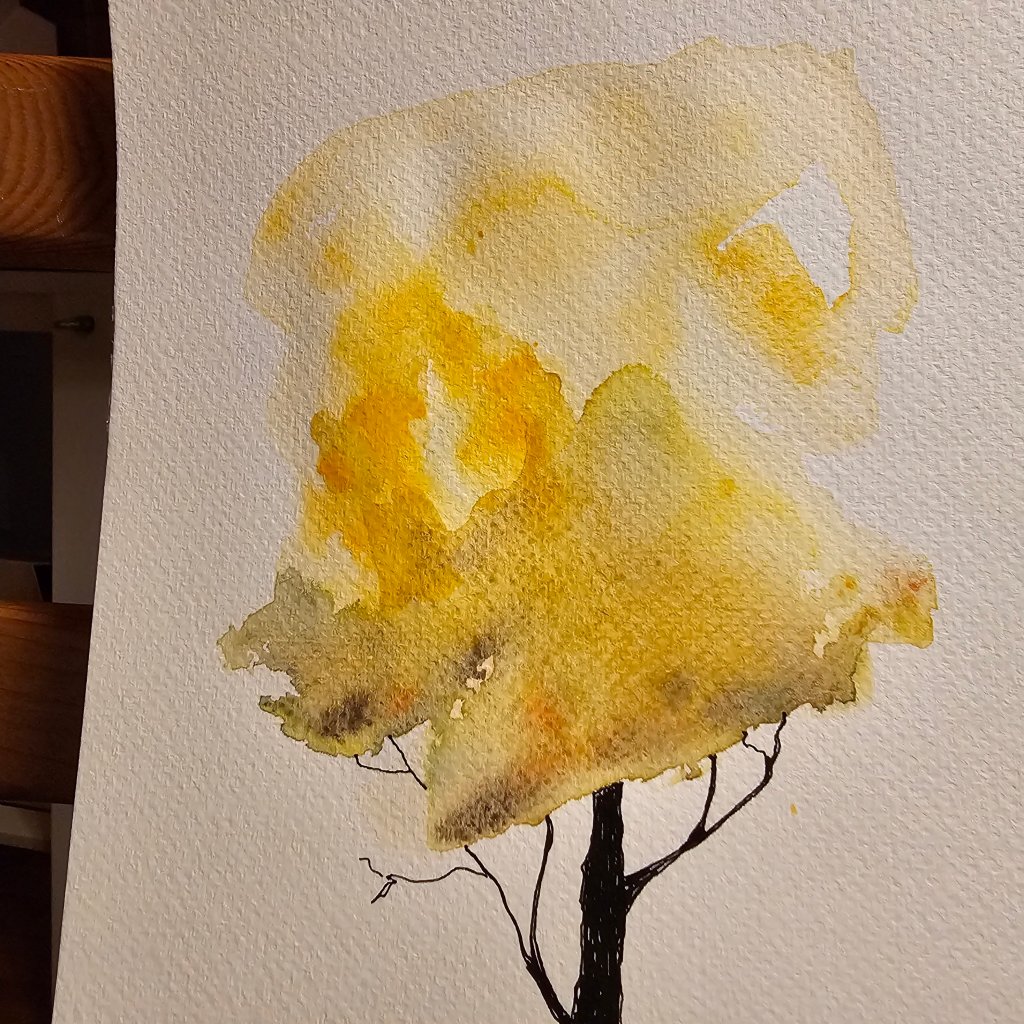
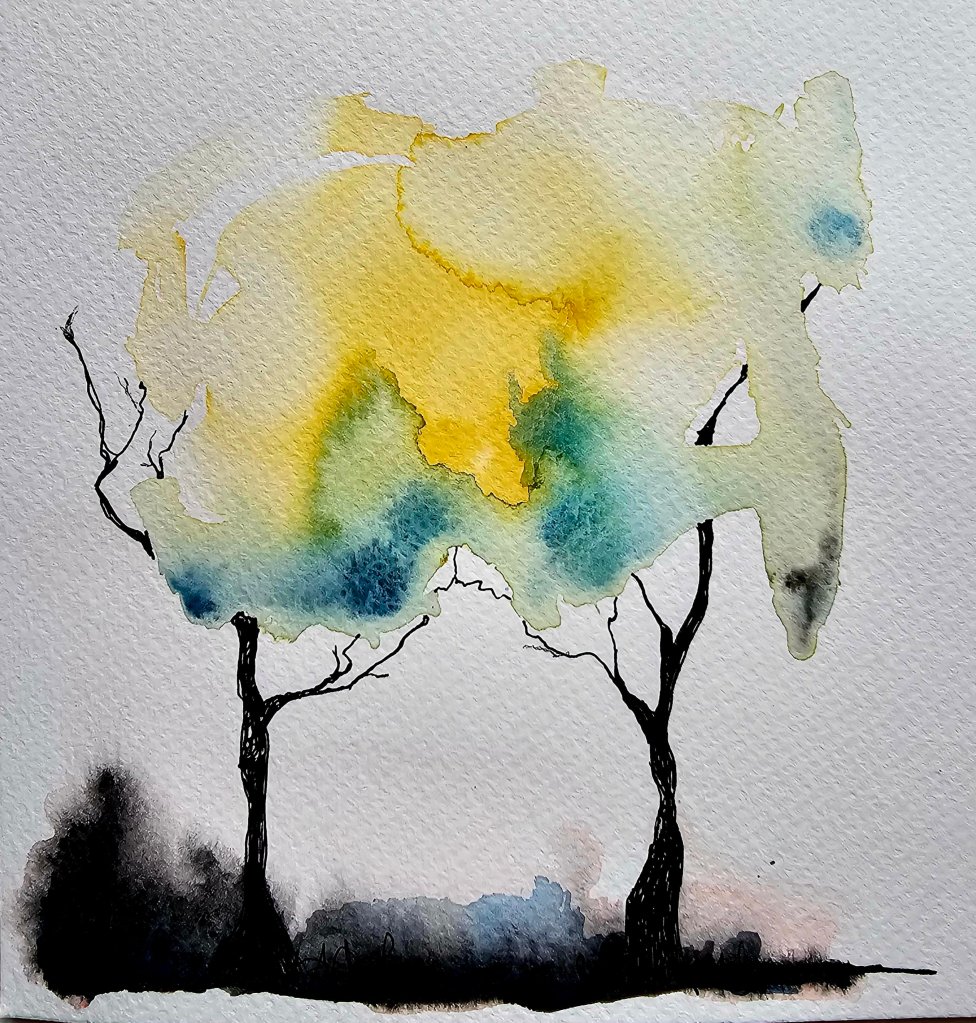
Watercolour paper is important to use in this case. You won’t have much luck with watercolour paint on a canvas or in a sketch book. This is because watercolour paper is made more stable and durable to withstand the humidity, plus they have an irregular textured surface which is the telltale signature of a watercolour painting. I zoomed in on the pictures I posted to show these features, take a close look and you can see that there are some more textured than others. This is because I have different paper sources. The best quality, respectively, is homemade, mold-made, then machine-made. If you’re just looking to start out for fun, get student quality machine-made. The paper can be sold in individual sheets, or in blocks. The higher the weight of the paper, the more texture and better quality. You don’t want something thin and smooth. Once you’ve tried a few different sources, you’ll quickly realize your preference and how you can make the paper work for you.
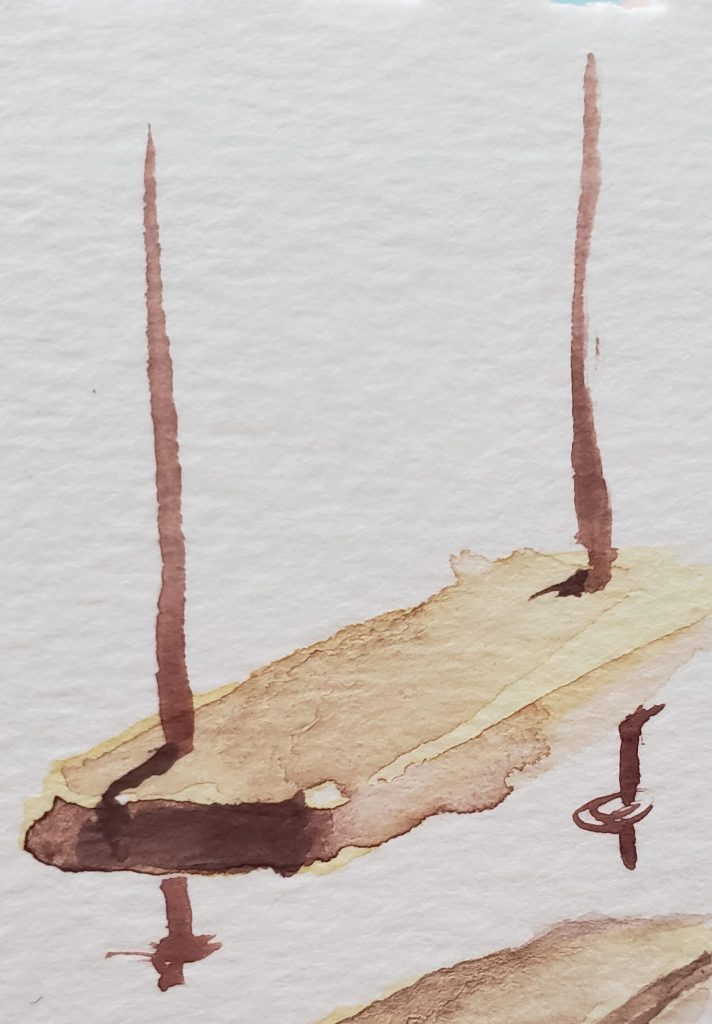
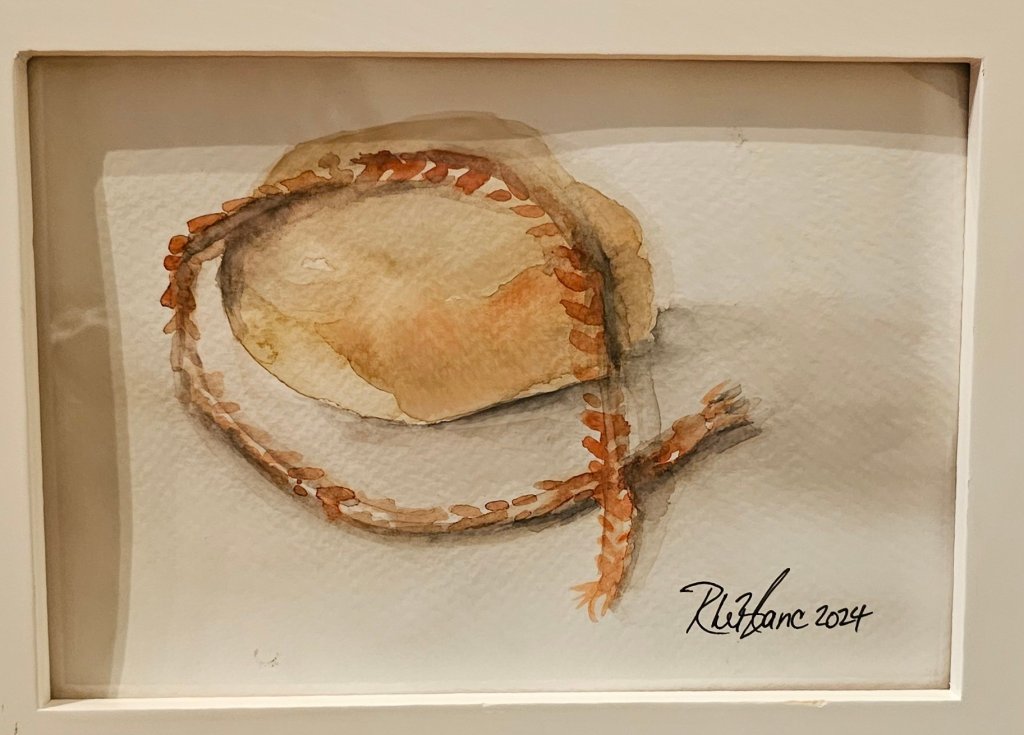
Swing Study. I only used two colours in this picture. I always start with the lighter colour first (as you can see as the base of the seat – the yellow-ish brown). I let the first layer dry before I apply the darker brown so the colours don’t bleed into each other. I want that distinct border that makes the shading pop out. Otherwise it’ll all blend together. If you find yourself in trouble by having your colours bleeding for whatever reason, don’t panic. Simply dab (don’t rub!) the spot where there is an excess of paint or water with a dry cloth or paper towel. If it’s in a tricky place, dab at it with a q-tip. You can even add a bit of water to the place you’re trying to fix if you need to remove a dark pigment. To get that dark brown even darker for the shadowy bits, I simply dabbed my brush with minimal water in the paint and lightly pressed it over the area I want to be more pigmented.
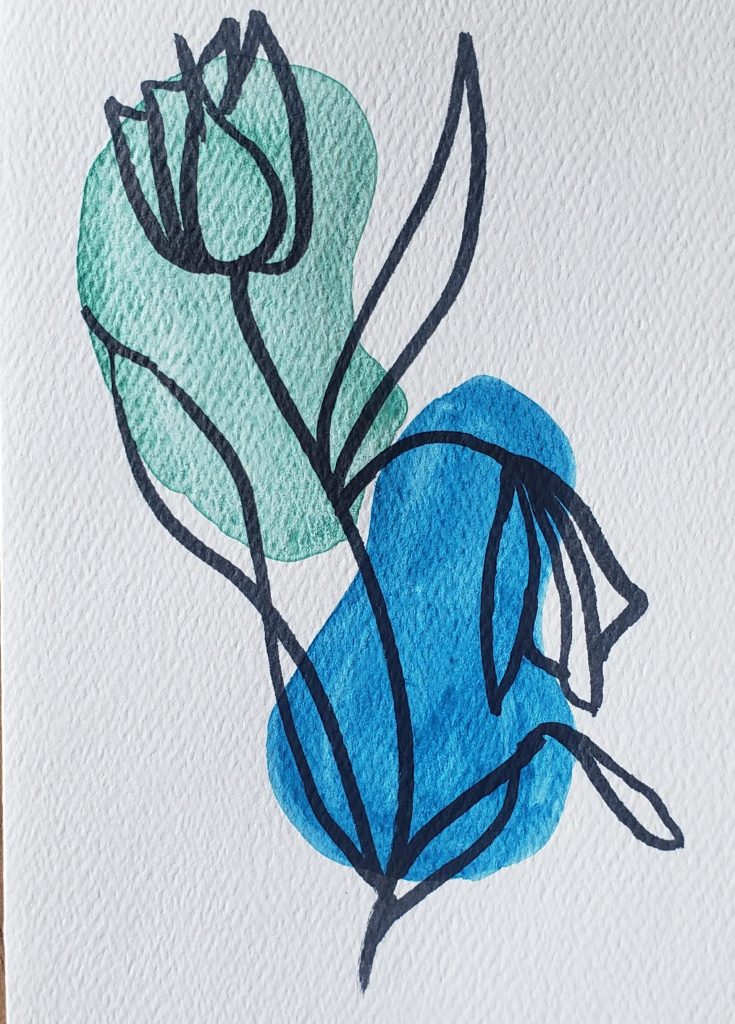
You have an example of watercolour paper (see the texture?) vs. an acid-free heavy weight paper. Ok so yes, it can be done on “other paper”, but the effect isn’t the same. That’s not to say it can’t be done. Art is about experimenting, and having different desired effects is personal preference.
 Rachel in Bloom
Leave a comment